
Sand and fibre arenas provide an excellent riding surface, but regular maintenance is important to keep the surface level, consistent and comfortable for horses.
As an arena is used, sand and fibre gradually move around the school. High-traffic areas can become compacted, material can build up around the edges and corners, and the fibre can become unevenly distributed through the sand.
This guide explains the common problems found with sand and fibre arenas and the practical maintenance that can help keep the riding surface in good condition.
Tested by Martin and Emma at Posh Pastures, Warwickshire — 21 October 2026.
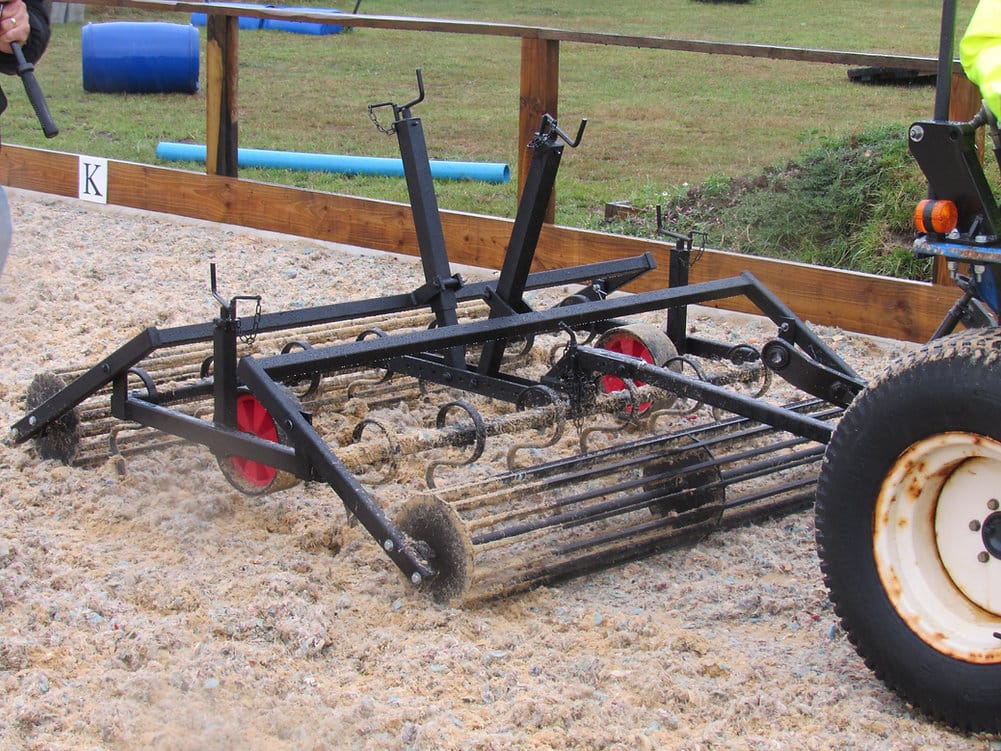
We tested the Multi-Surface Harrow on our own sand-and-fibre arena to see how it worked in practice. We were particularly impressed with the even finish produced by the combination of spring tines and twin crumb rollers.
The spring tines loosen the upper riding surface, while the two crumb rollers help break up clumps and redistribute the loosened material evenly. Together, they work the surface and provide an additional levelling and finishing action.
The machine we tested also had the optional side arm fitted. This is designed to bring displaced material back in from around the arena edges, helping address the build-up that develops alongside the boards.
The Scarrow combines spring tines with a following chain mat. It remains a useful option for owners who need one machine for both suitable arena surfaces and paddock maintenance.
For our own sand-and-fibre arena, we particularly liked the finishing action of the Multi-Surface Harrow’s twin crumb rollers. This was the main feature that stood out during our test.
Our observations relate to our own arena. The most suitable machine and settings will depend on your surface composition, depth, moisture and condition. Always adjust the working depth to avoid disturbing the underlying base or membrane.
Watch our Multi-Surface Harrow test on our sand-and-fibre arena
Need help choosing? Contact Posh Pastures to discuss your arena surface. You are also welcome to arrange a visit to try equipment we have in stock.
If you are choosing equipment for a sand and fibre surface, see our dedicated arena grader page for trailed and tractor-mounted options.
View Sand & Fibre Arena Graders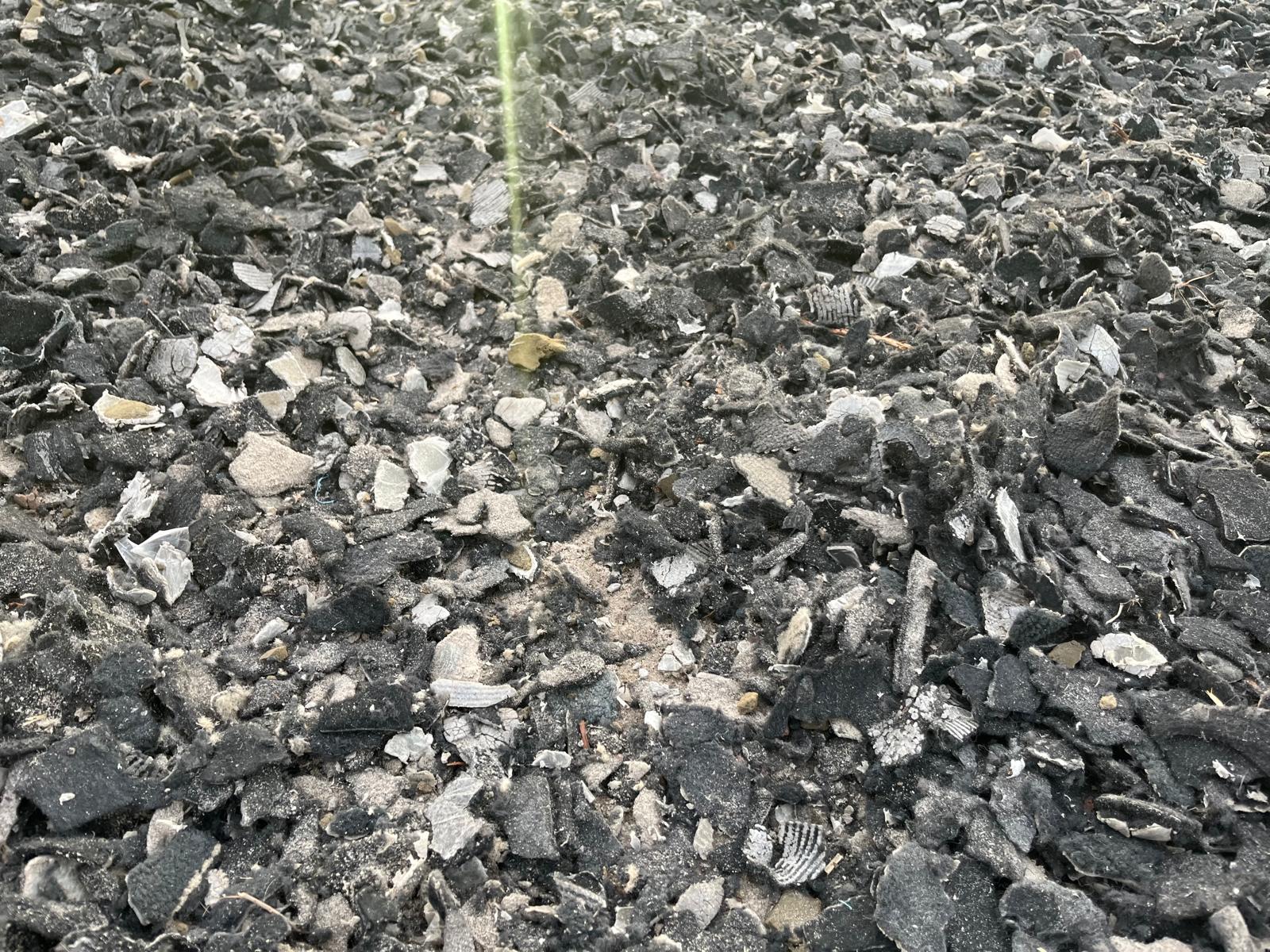
Compaction is one of the most common problems with sand and fibre arenas, particularly on the outside track, in corners and other heavily used areas.
As the surface becomes compressed it can feel increasingly firm and may stop riding consistently across the arena.
Regular maintenance: Working the upper surface with correctly adjusted tines helps loosen compacted material and keep the sand and fibre mixed.
Start shallow and increase the working depth gradually, taking care not to disturb the arena base or membrane.

Over time, riding and routine use can cause the sand and fibre within an arena surface to become unevenly distributed.
Fibre may build up in some areas while other sections become predominantly sand, particularly around tracks, corners and turning areas.
Regular maintenance: Harrowing the upper surface helps redistribute the fibre and sand, keeping the riding surface more consistent across the arena.
Little-and-often maintenance is generally easier than trying to correct severe separation once it has developed.
Regular riding gradually moves the arena surface, particularly around corners, along the outside track and in frequently used schooling areas.
This can create deeper areas, shallow patches and ridges where sand and fibre have accumulated.
Regular maintenance: Harrowing in different patterns helps redistribute the surface and prevents the same tracks developing repeatedly.
Material that has built up against the boards may also need to be brought back into the arena periodically to maintain an even surface depth.
The correct working depth depends on the depth and construction of your arena surface.
For routine maintenance, the aim is to loosen and mix the riding surface without reaching the underlying base or membrane.
Start shallow: Set the tines lightly at first and gradually increase the working depth until they are effectively loosening the compacted sand and fibre.
If you do not know the depth of your surface, check it before carrying out deeper or more aggressive harrowing.
How often an arena needs harrowing depends on how heavily it is used, the surface condition and the type of riding taking place.
A private arena used by one or two horses may need much less maintenance than a busy livery yard, riding school or competition arena.
Little and often: Regular light maintenance helps prevent deep tracks, compaction and excessive movement of the sand and fibre.
Rather than waiting until the surface becomes badly uneven, harrow when you begin to see tracks, compacted areas or fibre starting to migrate.

The moisture level of a sand and fibre arena can have a significant effect on how the surface rides and how it should be maintained.
During prolonged dry weather the surface can become loose, dusty or harder in heavily compacted areas, while excessive water can leave some surfaces soft or difficult to work effectively.
Adjust your maintenance: Avoid aggressive harrowing when conditions are unsuitable. Work the surface when it is in a condition that allows the sand and fibre to mix and redistribute evenly.
Good drainage and regular maintenance throughout the year will help keep the arena surface more consistent through changing weather conditions.

Harrowing works through the upper riding surface, helping loosen compacted areas and redistribute sand and fibre.
Adjustable tines allow the working depth to be matched to the condition of the arena, from light routine maintenance through to loosening more compacted areas.
Best for: Regular maintenance, loosening compaction, mixing sand and fibre and reducing established riding tracks.
Always work within the depth of the riding surface and avoid disturbing the arena base or membrane.

Grading is primarily about restoring the level and profile of the arena rather than simply loosening the surface.
A grader can move displaced material from high areas back towards low or worn areas and help correct the build-up that commonly develops around tracks, corners and arena edges.
Best for: Uneven arenas, low spots, material migration and restoring a more consistent surface depth.
For badly uneven surfaces, grading may be required before returning to lighter routine maintenance.
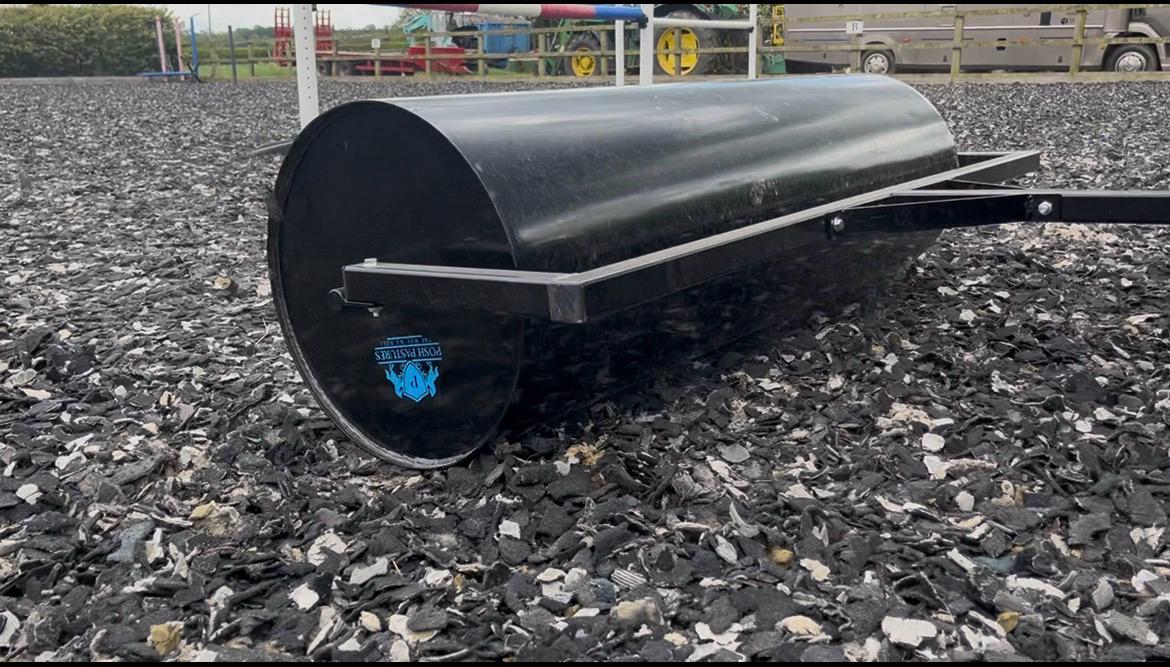
Rolling can be useful where a sand and fibre surface has become excessively loose or has been disturbed by deeper maintenance.
A roller helps settle and consolidate the surface, but the aim should be a stable and consistent riding surface rather than excessive compaction.
Best for: Settling a loose surface, firming areas after deeper harrowing or grading and helping restore an even finish.
Rolling requirements vary considerably between arena surfaces, so always consider the surface construction, moisture level and manufacturer's recommendations.
Good arena maintenance is usually about carrying out smaller jobs regularly rather than waiting until the surface becomes badly compacted or uneven.
The exact routine will depend on your surface, drainage and level of use, but the following approach provides a useful starting point.
Walk the arena before harrowing and look for compacted tracks, deep corners, low areas and places where fibre has accumulated.
Check the depth of the riding surface, particularly if you are unfamiliar with the construction of the arena.
Important: Knowing where the base or membrane sits helps prevent the tines being set too deeply.
Avoid following exactly the same route every time you maintain the arena.
Alternate your direction and pattern so that material is redistributed rather than continually pushed towards the same areas.
Pay particular attention: Corners, the outside track, gateways and frequently used schooling lines usually need the most maintenance.
After harrowing or grading, check that the riding surface is reasonably level and that sand and fibre have been redistributed evenly.
If deeper maintenance has left the surface excessively loose, light rolling may help settle and consolidate it.
The goal: A level, consistent surface with suitable firmness and an even distribution of sand and fibre across the arena.
Even a good quality arena surface can become difficult to maintain if the same problems are allowed to develop repeatedly. Avoiding a few common mistakes can help keep sand and fibre more evenly distributed and reduce the amount of corrective work needed.
Working below the riding surface can disturb the underlying construction and potentially damage the membrane. Start shallow and only increase tine depth when necessary.
Following the same route every time can continue moving material towards the same areas. Change direction and working patterns regularly to help redistribute the surface.
Sand and fibre gradually migrate towards boards and corners. Material should periodically be brought back into the main riding area to maintain a more consistent depth.
Rolling can help settle an excessively loose surface, but repeated heavy rolling can contribute to compaction. The objective is a stable riding surface rather than making it unnecessarily hard.
Regular light maintenance is generally easier than trying to correct deep tracks, severe compaction and substantial surface movement once they have developed.
For regular sand and fibre arena maintenance, the Scarrow Arena Harrow combines working tines with a following chain mat to help loosen, redistribute and finish the surface.
The Multi-Surface Harrow provides another versatile option for levelling and redistributing material on sand and fibre riding surfaces.
Where the surface needs finishing or firming after levelling, the 55" Towable Roller can also form part of the arena maintenance routine.
The right equipment depends on the type of arena surface, how badly it has compacted or moved, and whether you need to loosen, level, grade or consolidate the surface.
For routine maintenance, adjustable tines can help loosen compacted sand and redistribute fibre. Where material has moved significantly, more substantial grading may be required to restore an even surface depth. Rolling can also be useful where a surface needs settling after deeper maintenance.
Explore our arena maintenance equipment:
Different arena problems require different types of maintenance. Harrowing can loosen and redistribute the riding surface, grading can help correct uneven areas, while rolling can be useful when a loose surface needs settling.
If you are looking for machinery to maintain your arena, browse our arena maintenance equipment, including harrows and equipment suitable for sand, fibre and mixed equestrian surfaces.
For a versatile machine that can be used on suitable arena surfaces as well as paddocks, see the Scarrow 2m Harrow.
For more intensive surface maintenance, see our Multi-Surface Harrows within the arena equipment range.
Some arena problems may require more than routine maintenance, particularly where the surface has become badly uneven, drainage is failing or substantial quantities of material need to be redistributed.
Find contractors offering arena construction, maintenance and equestrian services through our Arena AND Equestrian Services Directory.